The Compliance Gap That Appears Before the New Door Is Even Fitted
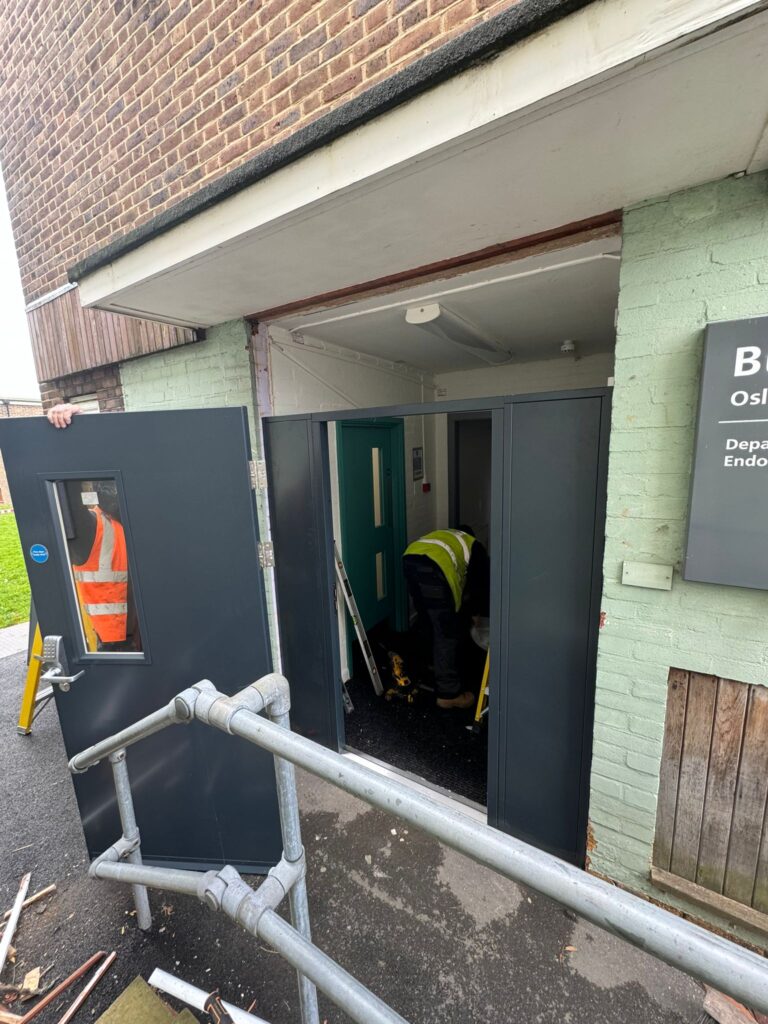
A security door that carries full LPS 1175 certification on delivery can still create an active compliance gap during installation. That is a fact many facilities managers only discover when an auditor raises a finding they were not expecting. The 2025 BSIA guidance update was explicit on this point: the period between removing an old door and commissioning its replacement is frequently absent from site-specific security plans, yet this window is precisely when the opening is at its most vulnerable.
If you are running a rolling replacement programme across a portfolio of properties, this is not a theoretical risk. It is a sequencing problem that compounds with every additional site, and the consequences range from a major non-conformance on your audit report to a gap in your insurance cover you did not know existed.
What a Multi-Site Replacement Programme Actually Involves
A multi-site security door replacement programme is the coordinated, phased procurement and installation of certified security doors across two or more properties managed under a single compliance obligation. That definition sounds straightforward. In practice, it is anything but.
Unlike a one-off installation at a single property, a portfolio-wide programme requires your supplier to hold or manufacture to consistent specifications across openings of different sizes, ages, and configurations. Each site needs its own documentation trail. Delivery schedules must align with building management constraints that vary property by property. The complexity scales sharply when different sites hold different SR rating requirements or carry mixed fire and security door obligations. A property requiring an SR2-rated communal door alongside a fire-rated door for a protected stairwell is a different specification challenge entirely from a warehouse requiring a single SR4 entrance point.
Suppliers who conflate these into a single generic order are setting you up for a problem further down the programme.
Three Scenarios Where Multi-Site Programmes Go Wrong
Problems in portfolio replacement programmes tend to cluster around three recognisable situations.
Batch deliveries misaligned with operational calendars
A facilities manager places a portfolio-wide order and the supplier batches deliveries for logistical convenience, without reference to the occupancy patterns at each property. Installations then fall during peak communal area activity, disrupting building operations and, more seriously, leaving shared access routes unprotected during times when resident or staff footfall is highest.
Generic product descriptions masking specification differences
Different sites within the same portfolio may require subtly different certified specifications. If the order documentation uses a single generic product description rather than site-specific certification documentation, you have no reliable way to demonstrate at audit that each opening received the correct door. The distinction between an LPS 1175 SR2 and an SR3 rating may seem minor on a purchase order; it is not minor on an audit report.
Financial year-end compression
Scheduling installation at the end of a financial year to meet budget deadlines rather than to fit the contractor’s optimal programme is one of the most common errors in compliance-driven procurement. Compressed timelines increase the risk of rushed commissioning that misses final checks, and a door that has not been properly commissioned cannot be considered certified for the purposes of your site-specific security plan.
Why This Matters More Than Most FMs Realise
An unprotected opening during a rolling programme can be sufficient cause for an auditor to raise a major non-conformance, even if the completed installation would have passed without question. The certification of the door itself is not the whole picture. The auditor is assessing whether your security plan remained intact throughout the works.
Your insurance position deserves equal attention. Many commercial property policies with security doors UK conditions attached treat an unprotected interim period as a breach of the policy schedule. That is a liability exposure most facilities managers have not considered, and it is not one your insurer is likely to overlook if a claim arises during that window.
Where communal doors in occupied residential or mixed-use buildings are involved, the duty-of-care implications are significant. The reputational damage from a security incident during a planned works programme is far harder to manage than the compliance inconvenience of a more carefully sequenced installation.
Why This Problem Keeps Getting Missed
The root cause is structural rather than negligent. Multi-site procurement is typically managed through a centralised purchasing function that focuses on headline cost and total programme lead time. That function is not always equipped to interrogate the site-by-site sequencing that compliance continuity requires.
Suppliers who are not manufacturers compound the problem. If your supplier sources doors from a third-party production facility, they cannot give you accurate, per-site delivery commitments because they do not control the production schedule. You receive a reassuring overall programme date, a single completion figure that looks workable, without the granular site-level detail you need to manage each property through its installation window without creating a compliance gap.
By the time the gaps surface, they surface at audit.
How to Diagnose Whether Your Current Programme Has This Risk
Pull out your current replacement schedule and work through these questions.
- Does each site entry show an individual delivery date, an installation window, and a named contact responsible for managing access on that day?
- Or does your programme document show only a single project start and end date covering multiple properties?
- Can your supplier provide a site-by-site delivery schedule in writing, with dates that are binding rather than estimated?
- Is the production lead time your supplier quoted based on in-house manufacturing or on a third-party supply arrangement?
- Does your programme document address what happens to each opening during the removal-to-commissioning window?
If you cannot answer yes to the first, third, and fifth questions with supporting documentation, the sequencing risk has not been addressed. A fire risk assessment carried out during the works period would likely identify the same gaps, which means your auditor will too.
Asking your supplier these questions before you place the order is considerably less painful than asking them after a post-works compliance audit raises a finding.
How Security Doors Direct Is Built for This Type of Programme
Security Doors Direct manufactures directly from its facility in Bromsgrove, Worcestershire. That matters for a multi-site programme because it removes the dependency on third-party production schedules that makes per-site delivery commitments so difficult for non-manufacturer suppliers to provide. When Security Doors Direct gives you a delivery date for a specific site, it is based on a production schedule the team controls.
The business has been manufacturing to British Standards since 1995 and works regularly with facilities managers running rolling compliance programmes across mixed portfolios. For each opening in a multi-site order, a separate certification pack is produced. When your audit comes around, you are not searching through a single project file trying to match a certificate to a specific address. Each site’s documentation stands alone and is ready to present.
Before any order is placed,site surveys are available across your full portfolio. That step captures the specification accurately for each opening from the outset, which is the most reliable way to prevent the generic-description problem from appearing later in the programme. Whether you need LPS 1175-rated steel doors for a commercial site, Secured by Design communal doors for a residential building, or fire-rated doors for protected escape routes, the specification is documented per site before manufacture begins.
Facilities managers who have been frustrated by suppliers unable to confirm lead times for bespoke requirements, or who have chased documentation long after installation was complete, will recognise the difference that direct manufacturing and structured documentation make to day-to-day programme management.
The Sequencing Decision That Protects Every Property in Your Portfolio
A multi-site security door programme is only as strong as its weakest sequencing decision. The compliance gap most likely to appear in your next audit is the one created during installation rather than after it. Addressing that risk requires a supplier who can commit to specific delivery dates for specific properties, produce documentation at a site level rather than a project level, and carry out pre-order surveys that capture accurate specifications across a varied portfolio.
Contact Security Doors Direct to request a portfolio review and receive a site-by-site programme proposal that keeps every property covered throughout the replacement process. The team can be reached at the Bromsgrove facility and is experienced in scoping multi-site programmes from initial survey through to final certification pack delivery.