The reason most homeowners delay upgrading their front door security
Ask anyone who has put off installing a steel security door and the answer is rarely about cost. The real barrier, time and again, is a single persistent worry: it will make my home look like a warehouse.
That concern is completely understandable. Search for steel security doors online and the first images you encounter tend to show heavy grey panels bolted to the entrance of an industrial unit, complete with visible reinforcement bars and utilitarian hinges. It is enough to put most homeowners off before they have read a single specification sheet.
The good news is that this image has almost nothing to do with what a modern residential security door actually looks like. Our most popular residential design features a woodgrain embossed finish that neighbours consistently mistake for a traditional timber door. Behind that finish sits a certified steel core that resists crowbar attacks for over three minutes of sustained force and meets Secured by Design standards. You get genuine break-in protection and a front door your visitors will admire, not recoil from.
This guide is written for homeowners who have been weighing up security against appearance for too long. If that sounds familiar, read on.
What modern aesthetic security door options actually look like
Residential security doors have moved a long way from their commercial origins. The steel structural core remains, because steel is what delivers the protection, but the external finish is now chosen from a range designed specifically to complement UK home architecture.
Woodgrain polymer coatings
These finishes are embossed with authentic timber textures replicating oak, mahogany, and walnut grains, as well as painted grey options for those who prefer a painted-timber look without the upkeep. The visual warmth they provide is genuinely convincing. Unlike real timber, the polymer coating resists fading for over ten years and requires no sanding, staining, or repainting.
Smooth composite face skins
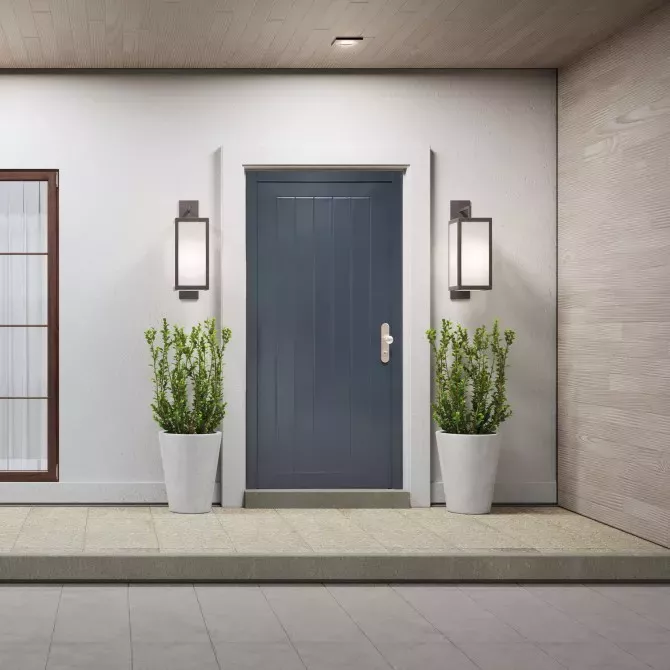
For modern or recently renovated properties, smooth composite skins are available in anthracite grey, chartwell green, and cream. These suit contemporary builds and renovated Victorian terraces alike, particularly where the windows have already been replaced with uPVC or aluminium in matching colours.
Decorative glazing
Security and natural light are not mutually exclusive. Laminated and toughened glass panels in obscured, leaded, and Georgian bar designs admit daylight into hallways without compromising protection standards. The glazing units are bonded and framed in ways that prevent removal from the outside.
Panel configurations and hardware
Customers can choose from two-panel, four-panel, and cottage-style configurations. Hardware options include chrome, brass, and black ironwork, and frame colours are powder-coated to match existing window frames and fascias. None of these aesthetic choices touch the steel core underneath. The security specification remains identical regardless of finish.
Where the appearance concern stops purchases in their tracks
The worry surfaces in several specific situations, and it is worth naming them because recognising the pattern can save months of unnecessary delay.
The first trigger is an online image search. Commercial security door photography dominates search results because industrial and public-sector installations represent higher sales volumes for most steel door manufacturers. A homeowner searching for front door security sees schools, warehouses, and car parks. The instinct is to assume this is simply what steel security doors look like.
The second trigger comes when comparing quotes. General steel fabricators often offer structurally sound doors with no decorative finish, no colour options, and no customisation. These are genuinely cheaper, but the comparison is unfair. It is roughly equivalent to judging the appearance of fitted kitchens by looking at flatpack carcasses.
Neighbourhood perception adds another layer. Some homeowners worry that a visibly security-focused door signals that the area is unsafe, or that their property has been specifically targeted, and that this perception could unsettle neighbours or affect property values. The irony is that a well-chosen residential security door in a sympathetic finish tends to raise buyer interest rather than suppress it.
Conservation areas and listed buildings create additional concern, and rightly so. Planning restrictions or covenant conditions in some areas do prohibit external alterations that visibly change a property’s character. The important distinction is that a well-matched residential security door in a period-appropriate finish often satisfies these conditions in a way that an obviously industrial door would not. A conversation with the local planning authority, or with us, can clarify this quickly.
Finally, there is the household disagreement pattern. One partner prioritises security; the other prioritises appearance. Neither is wrong. The delay continues while the anxiety about local break-ins quietly grows in the background.
Why appearance genuinely matters, and not just for vanity
Estate agents consistently estimate that front door appearance influences buyer perception by between five and ten per cent of asking price in competitive markets. That is a meaningful figure when you are planning to sell, or when you are remortgaging and need an accurate valuation.
A door that feels unwelcoming affects daily life too. The entrance to your home shapes how you feel every time you walk through it, and how your guests feel when they arrive. Security is something you want to feel at home, not feel imprisoned by.
There is also a practical longevity argument. Decorative powder-coated and polymer finishes protect the steel substrate from weather corrosion, extending door lifespan from an estimated fifteen to twenty years to twenty-five to thirty years with straightforward maintenance. A door that is well-finished from the outset requires only an annual wash rather than periodic remedial treatment.
Perhaps the most avoidable cost is this: doors that clash aesthetically are often replaced after just a few years despite being structurally sound. The security investment is effectively wasted, because the door is removed before its working life is complete. Getting the finish right at specification stage avoids this entirely.
Why product research so often misses this
The gap between what residential security doors look like and what homeowners expect them to look like is largely a product of how search results are structured. Commercial installations generate the most photography and the most web content, so they dominate the results for broad searches like “steel security doors”.
Budget manufacturers focus development investment on structural components rather than finish quality. Limited colour ranges and no customisation are standard at the lower price point, because decorative finishing adds both cost and production complexity. When a homeowner encounters these products early in their research, the impression sticks.
The physical weight of a residential security door, typically seventy to ninety kilograms compared to thirty to forty kilograms for a standard composite door, also creates an issue with static showroom displays. Even where residential options are shown, a door sitting in a display stand communicates very little about how the same door looks fitted within brickwork, framed by planting, with the front garden in context. It requires either an installation visit to a reference property or a quality digital visualisation to give an accurate impression.
How to evaluate design options properly
These steps will help you move from uncertainty to a decision you will be confident in for decades.
- Request to see installed examples in residential properties similar to yours. Customer reference visits or detailed case study photographs showing the door within its architectural context, not isolated product shots, are worth asking for specifically. A reputable manufacturer will have them.
- Examine finish samples in natural daylight. Showroom lighting is flattering. Daylight reveals how woodgrain textures respond to direct sun and shadow, and whether a colour genuinely complements your brickwork and existing window frames. Bring a finish sample home before committing.
- Match the design to your property’s architectural period. Victorian and Edwardian properties suit traditional panel designs with period-appropriate ironwork. Properties from the 1930s and 1950s work well with simple two-panel or four-panel designs. Modern builds suit flush or near-flush designs in anthracite or grey. Getting this alignment right is what makes a security door blend rather than dominate.
- Ask whether digital visualisation is available. A photomontage superimposing your chosen door design onto a photograph of your actual property’s frontage removes a great deal of aesthetic guesswork before any money changes hands.
- Request maintenance information for your chosen finish. Powder-coated steel requires only an annual wash. Woodgrain polymer coatings resist fading for ten years or more. This matters for long-term satisfaction as much as initial appearance.
How Security Doors Direct bridges the gap between security and appearance
Security Doors Direct has been manufacturing and supplying steel security doors from its Bromsgrove facility since 1995. The residential range is designed specifically to complement UK home architecture, not adapted from commercial products.
All residential doors offer customisation of panel design, finish colour, glazing configuration, and hardware style is included as standard. The same Secured by Design certification applies across the range regardless of the finish you choose. You are not trading protection for appearance; you are getting both.
For homeowners in conservation areas or properties with architectural covenants, our team is experienced in advising on finishes and panel configurations that meet planning requirements. We can provide written product descriptions to support any application if needed.
You can explore the full residential range and request a consultation through our website at Security Doors Direct.
Serious security and a welcoming home are not in conflict
The fear that a steel security door will make your home look unwelcoming is based on an outdated image of a product category that has changed significantly. Modern residential security doors can be made to look, from the street, indistinguishable from a premium timber door. They deliver Secured by Design break-in protection, carry insurance-approved certifications, and are made to measure for your existing frame.
The anxiety driving this purchase is real and it deserves a proper solution. A door that sits well on your home, earns the approval of your neighbours, and protects your property through the night gives you something more valuable than a security certificate: it gives you genuine peace of mind every day.